
- home
-
How Handheld Laser Welding Machine Is Transforming Small and Medium-Sized Factories
2025-12-20As manufacturing demands rise, traditional metal welding methods are proving harder to maintain. Skilled welder training is time-consuming, results depend heavily on operator experience, and post-weld grinding increases both costs and lead times.
Small and medium-sized manufacturing enterprises (SMEs) are under increasing pressure. On one side, customers demand better weld quality, cleaner finishes, and faster delivery. On the other, factories face rising labor costs, a shortage of skilled welders, and limited budgets for large-scale automation.
This is why handheld laser welding machines are gaining rapid adoption among SMEs worldwide.
Unlike conventional welding methods, handheld laser welders are designed to be compact, flexible, and easy to deploy. For small factories, this significantly lowers the barrier to entry.
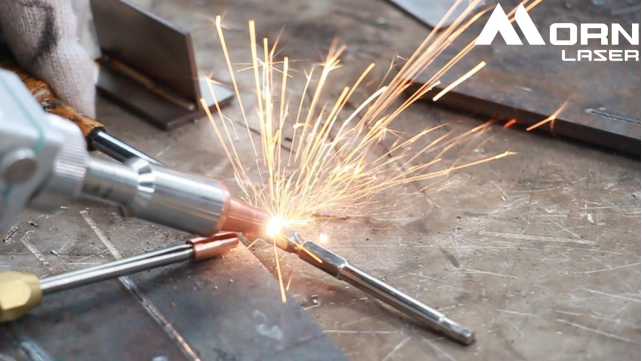
A handheld laser welding system allows:
Quick installation without complex production line modifications
Operation by technicians with short training cycles
Use across multiple workstations and products
This flexibility makes laser welding accessible even for workshops with limited floor space or diverse product lines.
Reducing Dependence on Highly Skilled Welders
One of the biggest challenges for SMEs is labor dependency. Skilled welders are expensive and increasingly difficult to recruit. Fiber laser welding machine simplifies the welding process and reduces reliance on individual skill levels.
With stable welding performance and preset parameters, factories can achieve:
More consistent weld appearance
Reduced rework caused by human error
Predictable production quality across shifts
This directly improves production stability for small teams.
Improving Productivity Without Major Automation Investment
For many SMEs, full automation is simply not practical because of high costs and operational complexity. Handheld laser welding bridges the gap by bringing laser-level efficiency and quality without the heavy investment of robotic systems.
Compared to traditional welding, handheld laser welding machine helps:
Increase welding speed
Reduce heat distortion
Minimize post-weld polishing and grinding
Shorten overall production cycles
For small batch and customized orders, this productivity gain is especially valuable.
Supporting a Wider Range of Materials and Applications
Many SMEs work with diverse materials such as stainless steel, carbon steel, aluminum, and galvanized sheets. Switching between materials using traditional welding methods can be inefficient.
Handheld laser welders allow manufacturers to handle multiple materials and thicknesses with minimal adjustment, making them ideal for:
Sheet metal fabrication
Cabinets and enclosures
Furniture and hardware
Automotive and motorcycle parts
Customized metal products
This versatility helps small factories expand service offerings without expanding equipment inventory.
A Practical Upgrade Path for Growing Businesses
For many SMEs, laser welding is a practical step toward advanced manufacturing. It helps factories enhance quality, strengthen customer trust, and take on more orders while keeping investment under control.
As production grows, these systems can later integrate with automation or complement existing laser cutting equipment, supporting long-term development.
Handheld laser welding is not about replacing every welding process overnight. It is about giving small and medium-sized factories a realistic way to upgrade welding quality, reduce labor pressure, and remain competitive in demanding markets. For many SMEs, it represents the most balanced solution between performance, flexibility, and investment.
Looking to upgrade your welding process? Contact Morn Laser to learn more about our laser welding solutions designed specifically for small and medium-sized factories.


![]() Get a Quote
Get a Quote
![]() Get a Quote
Get a Quote x
Get a Quote
Get a Quote x
![]()

